
Transforming Clinical EEG Workflows Through Intuitive Design and Accessible Information

Also Neuroscience
Client
Client
Also Neuroscience
Industry
Healthtech
Country
United States

1. About the Company

Alto Neuroscience is a California-based, clinical-stage biopharma company with a team of over 50, developing personalized treatments to improve neuropsychiatric care. By leveraging EEG-based brain biomarkers, Alto is pioneering an approach that matches patients to the treatments most likely to work for them, accelerating recovery for conditions including depression, insomnia, and PTSD. Central to this mission is the clinical EEG testing process — a technically complex workflow that requires clinicians to operate specialized hardware and software while ensuring patients remain comfortable and informed throughout.

2. The Challenge

As Alto Neuroscience scaled its clinical operations across multiple sites, several usability and experience challenges emerged that impacted both clinician efficiency and patient confidence:

  • A Complex, Error-Prone Hardware and Software Setup: Clinicians were required to run two software applications concurrently alongside EEG hardware, a process that frequently led to confusion, connectivity issues, and failed configurations. The complexity of the setup made onboarding new clinicians time-consuming and created frustration that slowed test preparation across clinical sites.
  • Unstructured User Manuals That Hindered Troubleshooting: The existing user manuals contained comprehensive information but lacked clear organizational structure. Clinicians struggled to locate specific guidance quickly, particularly when troubleshooting mid-test. The absence of a logical flow meant that finding the right information at the right moment was a matter of trial and error, leading to inefficiencies and interrupted workflows.
  • A Data Repository That Was Difficult to Navigate and Analyse: Tech Check, a critical repository for test information, served as the backbone of data access for clinicians. However, the interface was difficult to navigate, particularly for clinicians with limited system access. There were no filtering options, making it hard to locate specific test results, analyse pass/fail ratios, or extract meaningful insights from collected data efficiently.
  • Patient-Facing Information That Was Overwhelming and Inaccessible: The information presented to patients during the EEG process needed to be engaging and easily understandable, particularly for individuals with conditions such as colour blindness and dyslexia. The original design overwhelmed users with dense text and complex instructions, creating anxiety and confusion at a moment when clarity and comfort were essential to obtaining reliable test results.

These challenges required a design-led approach that addressed the needs of two very different user groups — clinicians seeking efficiency and patients needing clarity — within a high-stakes clinical environment where errors have real consequences.

3. Solution Implemented by Tequity

Tequity partnered with Alto Neuroscience as its dedicated UX and design team, working across clinician workflows, documentation, data tools, and patient-facing experiences to bring usability and clarity to every touchpoint of the clinical EEG process.

  • Streamlined the Hardware-Software Setup With a Guided Checklist: Tequity conducted user interviews with clinicians to identify the specific pain points in the EEG setup process. Based on these insights, a detailed, step-by-step checklist was designed that guided clinicians through the correct sequence for connecting and configuring all hardware and software components. This structured approach eliminated guesswork, significantly reduced troubleshooting time, and ensured that all components worked seamlessly together from the first attempt.
  • Restructured User Manuals Around the Clinical Workflow: Tequity performed a thorough content audit of the existing manuals to understand their scope and identify structural gaps. The manuals were then reorganized into three distinct sections — pre-use, during use, and post-use — aligning the documentation with the natural flow of the clinical testing process. This categorization made it immediately clear where to look for guidance at any stage, enabling clinicians to troubleshoot quickly and continue tests without unnecessary interruption.
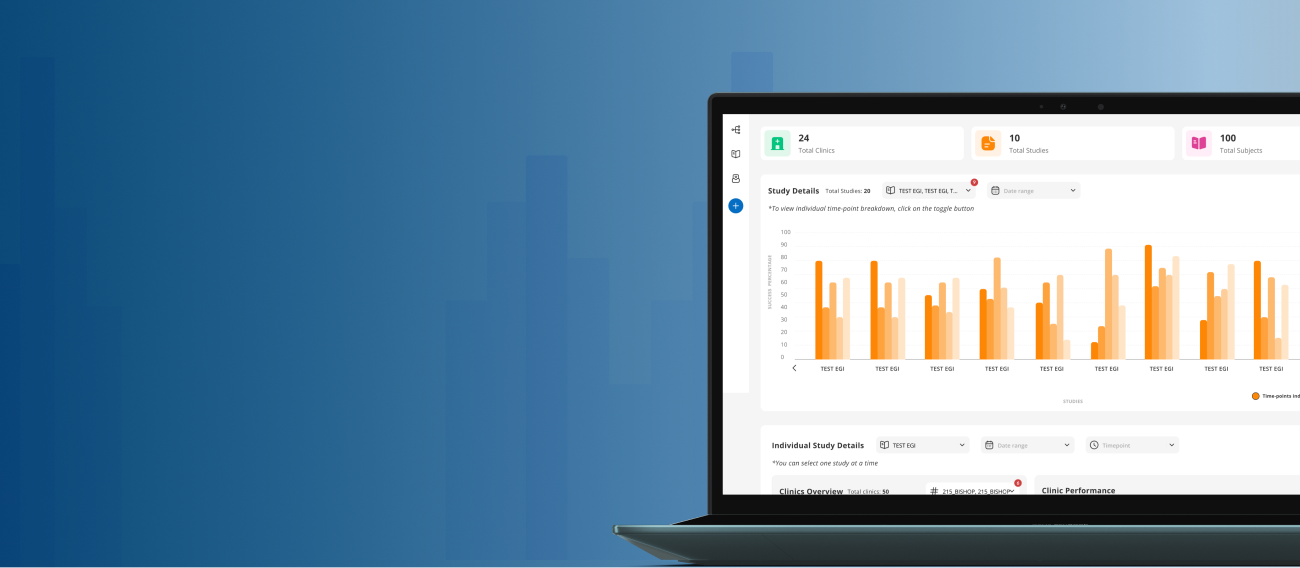
  • Redesigned Tech Check With Filtering and Dynamic Data Access: Tequity mapped out the clinician user journey and identified the key touchpoints where data access broke down. A tagging system was introduced for test subjects, allowing clinicians to filter information based on parameters such as pass/fail ratios and test types. An interactive overlay was developed to display essential information dynamically on click, reducing the need to navigate across multiple pages. This streamlined approach enabled quick retrieval and analysis of relevant test results, significantly improving workflow efficiency.
  • Designed an Accessible, Patient-Centred Information Experience: Through secondary research into the needs and challenges of patients interacting with clinical information, Tequity simplified the content presentation by limiting instructions to one per screen and incorporating visual cues to guide users through each step. Intuitive icons, diagrams, and colour-coded indicators were introduced to communicate success and failure states clearly, ensuring the experience was accessible to patients with colour blindness, dyslexia, and other conditions. The result was a calmer, more comprehensible patient experience that supported accurate test outcomes.

4. Results

The partnership between Alto Neuroscience and Tequity delivered measurable improvements across clinician efficiency, data workflows, and patient experience:

  • The guided setup checklist delivered a 37% reduction in clinician training time, enabling new team members to configure EEG hardware and software confidently and consistently across clinical sites.
  • The restructured user manuals drove a 40% improvement in task completion rate, confirming that clinicians could now locate the right guidance at the right stage and resolve issues without disrupting the testing process.
  • Improved Engagement, Accuracy, and Efficiency in Data Collection: The redesigned Tech Check interface with filtering, tagging, and dynamic overlays measurably improved clinician engagement rates, reduced error rates during data collection, and shortened task completion times — transforming a friction-heavy workflow into a streamlined, intuitive experience.
  • Reduced Interpretation Time and Errors for Patients: The accessible, visually guided patient experience reduced interpretation time and lowered error rates in data interpretation, ensuring patients could engage with the EEG process calmly and accurately — a critical factor in obtaining reliable clinical outcomes.
  • With streamlined clinical workflows, accessible patient experiences, and efficient data tools now in place, Alto Neuroscience is positioned to scale its clinical operations with confidence as it advances its mission of bringing personalized neuropsychiatric care to patients who need it most.

Let’s make something that matters.
Ajay is here to guide you every step of the way.

We help founders go from Idea to Impact.

From validating early ideas to elevating mature products, we partner with teams who want clarity, momentum, and design that drives growth.